

A sump pump is the only thing standing between a heavy North Georgia rainstorm and a flooded basement or crawl space. When the pump fails — usually right when you need it most — you find out fast. BF Plumbing & Drain installs, repairs and replaces sump pumps across the area, including primary, secondary and battery-backup systems. We test what you have, fix what's worth fixing, and replace pumps before they fail when the warning signs are there.
We carry 1/3 HP and 1/2 HP cast-iron pumps on the truck and we install dedicated battery backups for homes where a power outage during a storm would be a disaster. Every install includes a check valve, proper discharge routing, and a tested full cycle.
When to service or replace a sump pump
Sump pumps fail quietly until you need them. Indicators it's time:
- Pump cycles constantly or runs continuously — float stuck or pit too small.
- Pump runs but no water moves — failed impeller or clogged inlet screen.
- Pump is over 7 years old — average service life is 7–10 years.
- Unusual noises — bearing failure imminent.
- Visible rust, sediment buildup, or oil sheen in the pit.
- No battery backup and the house is in an area where power outages and storms hit together.
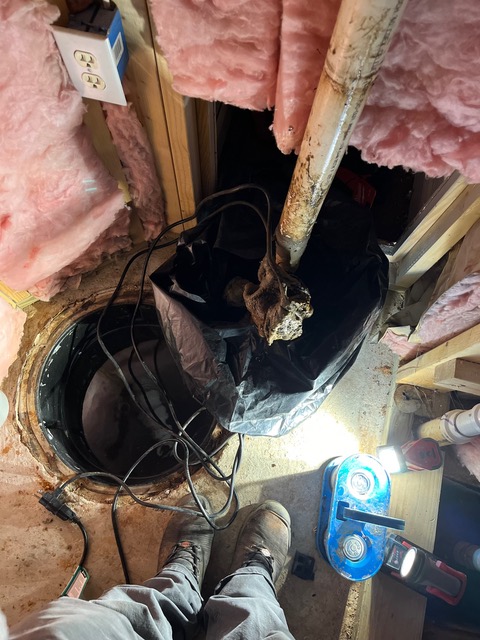
Our sump pump service process
Sump pump work needs to be thorough — half-installed protection isn't protection:
- 1
Test the existing system
Pour water into the pit and watch the cycle. Float operation, run time, vibration, current draw — all checked.
- 2
Pit & discharge inspection
Pit clean, inlet screen clear, check valve functioning, discharge line clear of debris and properly graded away from the foundation.
- 3
Replace with the right unit
1/3 HP for small to medium pits. 1/2 HP cast iron for larger pits or higher-volume situations. Submersible vs. pedestal based on pit dimensions and noise tolerance.
- 4
Battery backup install (when chosen)
Dedicated DC backup pump with a sealed battery in a vented battery box, alarm to alert you when the backup activates. This is the system that runs during a power outage.
- 5
Final cycle test
Full pit fill, cycle observation, alarm test, discharge confirmation. We document the install and start the warranty.
What sump pump service costs in North Atlanta
Flat-rate. Drivers:
- Service & test vs. full replacement vs. new install vs. battery backup addition.
- Pump horsepower and material (cast iron vs. thermoplastic).
- Discharge line modifications — extending, re-routing, or adding freeze-resistant fittings.
- Check valve replacement and pit cleanout.
- Battery backup system and battery capacity.
- Alarm and Wi-Fi monitoring add-ons.
Sump pumps and North Georgia weather
North Atlanta is a patchwork of housing stock and soil conditions, and that drives a lot of plumbing decisions. Subdivisions built in the 1990s and early 2000s across Canton, Woodstock and Holly Springs typically run builder-grade PVC and CPVC that's now reaching end-of-life on fittings and shutoffs. Older homes in Marietta, Roswell and Kennesaw still have cast-iron drains and copper supply that scale up and pinhole. Newer construction in Acworth, Ball Ground and Cumming sits on red clay that shifts seasonally and stresses underground lines.
We work in this market every day, so we know which neighborhoods have shared sewer easements, which water utilities require a permit pull, and which inspectors want to see specific fittings. That local knowledge shortens the job and keeps it code-correct the first time.
Need service in a specific area? See our pages for Canton, Woodstock, Holly Springs, Acworth, Kennesaw, Marietta, Roswell and more on our service areas page.
Frequently asked questions
How long do sump pumps last?
7–10 years for most residential units. Cheap thermoplastic builder-grade pumps may go 4–6. Cast-iron premium pumps reach 10–12.
Do I need a battery backup?
If a flooded basement would be a major loss, yes. Power outages and heavy storms arrive together — the primary pump can't run without electricity.
How often should the sump pump be tested?
At least twice a year, and before the wet season. Pour 5 gallons in the pit and confirm a full cycle.
Where should the discharge water go?
At least 10 feet away from the foundation, graded so it runs away from the house, and ideally tied into a yard drain that empties to daylight — not back into the sewer or the foundation drain.
Need it fixed today?
Same-day service across North Atlanta. Call now or request a quote online.