
When a sewer line is too far gone for spot repair or relining, full replacement is the right call. Collapsed sections, repeated bellies, decades-old Orangeburg or clay tile, and severe root intrusion across multiple joints all signal that you're spending good money chasing the wrong fix. BF Plumbing & Drain replaces residential sewer lines across North Atlanta using both open-trench and trenchless pipe-bursting methods, with full permitting and inspection handled in-house.
Every replacement starts with a camera inspection and depth survey so we can scope the job honestly. You'll know exactly what we're replacing, how we're getting to it, and what the work area is going to look like before we break ground. Our 1-year workmanship warranty backs the install; the pipe itself carries a manufacturer warranty often measured in decades.
When replacement is the right call instead of repair
Repair makes sense when the rest of the pipe is sound. Replace when the line itself has reached end-of-life. Indicators:
- Multiple cracks, offsets or bellies across the length of the line on camera.
- Orangeburg, clay tile, or original cast iron in a home over 50 years old.
- Repeated root intrusion at multiple joints — the joints themselves have failed.
- A history of yearly main-line cleanings just to keep the line flowing.
- Collapsed section that has caused the line to lose pitch.
- Sewer line that no longer connects properly to the city tap.
Our sewer line replacement process
A replacement is a multi-day job done right. Here's what to expect when you hire us:
- 1
Scoping & quote
Camera inspection, line locate and depth measurement, then a written scope and flat-rate quote. We walk you through trenchless vs. open-trench trade-offs for your specific situation.
- 2
Permit & utility locates
We pull the plumbing permit with your county or city and call 811 for underground locates. Gas, electric, water and telecom lines get marked before any dig.
- 3
Excavation or pipe-burst setup
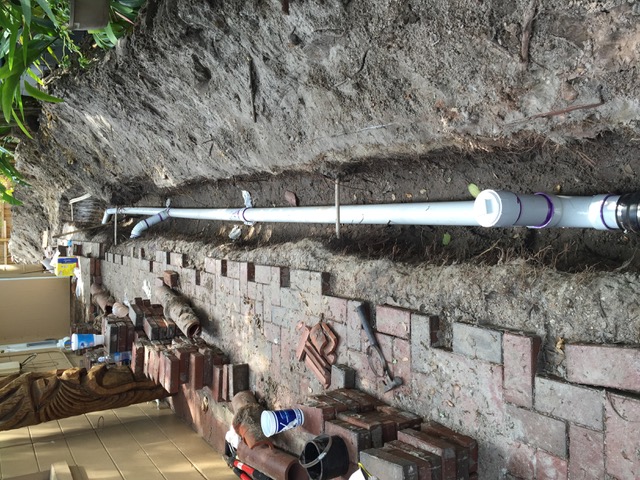
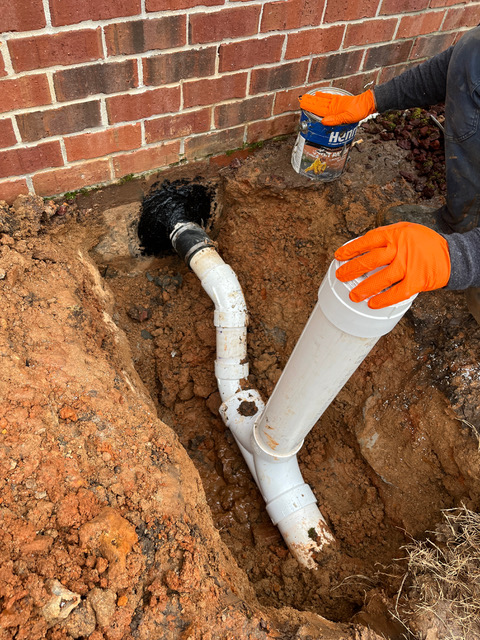
Open-trench digs from the house to the tap, with shoring on deeper runs. Pipe-bursting opens entry and exit pits only, then pulls new HDPE pipe through the old line's path while fragmenting the old pipe outward.
- 4
New pipe installation
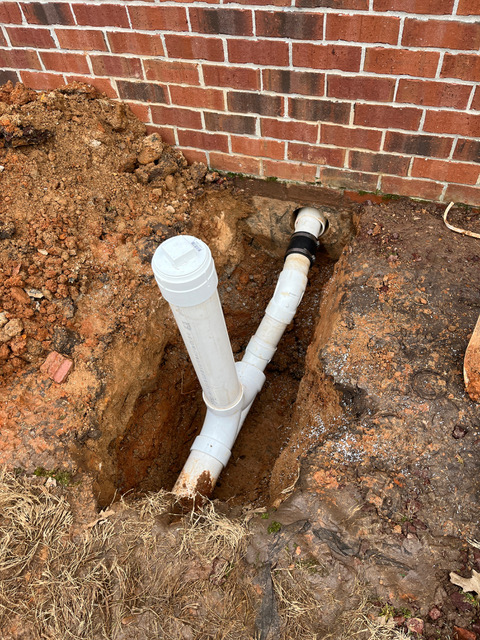
Modern SDR-35 PVC or fused HDPE, proper bedding, correct pitch (typically 1/4" per foot), new cleanouts where code requires, and a new connection at the city tap.
- 5
Inspection & restoration
City inspector signs off the work, then we backfill, compact, and restore the surface — sod, gravel, concrete or asphalt — to the agreed scope.
What sewer line replacement costs in North Atlanta
Replacement is the biggest plumbing investment most homeowners make. Pricing depends on:
- Method: open-trench vs. trenchless pipe-bursting. Trenchless usually costs more per foot but saves money on landscape restoration.
- Length and depth of the line.
- Surface restoration scope — driveways, retaining walls and mature landscaping all add cost.
- County permit fees and inspection requirements.
- Whether the city tap connection needs to be replaced.
- Soil conditions — rock and heavy clay slow excavation.
What we see in older North Atlanta homes
North Atlanta is a patchwork of housing stock and soil conditions, and that drives a lot of plumbing decisions. Subdivisions built in the 1990s and early 2000s across Canton, Woodstock and Holly Springs typically run builder-grade PVC and CPVC that's now reaching end-of-life on fittings and shutoffs. Older homes in Marietta, Roswell and Kennesaw still have cast-iron drains and copper supply that scale up and pinhole. Newer construction in Acworth, Ball Ground and Cumming sits on red clay that shifts seasonally and stresses underground lines.
We work in this market every day, so we know which neighborhoods have shared sewer easements, which water utilities require a permit pull, and which inspectors want to see specific fittings. That local knowledge shortens the job and keeps it code-correct the first time.
Need service in a specific area? See our pages for Canton, Woodstock, Holly Springs, Acworth, Kennesaw, Marietta, Roswell and more on our service areas page.
Frequently asked questions
Trenchless or open-trench — which is better?
Neither is universally better. Trenchless is faster, less invasive, and ideal when the existing pipe path is acceptable. Open-trench is required when the line needs to be re-routed, or when there's a major belly that needs to be corrected with new pitch.
How long will a new sewer line last?
Modern PVC and HDPE sewer pipe is rated for 75–100 years under normal residential use.
Will my yard look the same after?
After trenchless, mostly yes — two pits to restore. After open-trench, the trench line is replanted with sod or seeded, but established landscaping along the trench has to be replaced. We agree on the restoration scope before we start.
How long does the work take?
Trenchless: typically 1–2 days. Open-trench residential: 2–4 days depending on length and depth. Inspection scheduling can add a day.
Need it fixed today?
Same-day service across North Atlanta. Call now or request a quote online.