
A failing sewer line will make itself known eventually — usually at the worst possible moment. Slow drains throughout the house, sewage smells in the yard, soggy patches of grass, or a backup into a basement drain all point to a problem in the line between your home and the city tap. BF Plumbing & Drain repairs sewer lines across North Atlanta with camera-first diagnosis, real options (not just a sales pitch for replacement), and trenchless methods when the line can be saved.
We start by finding out exactly what's wrong. Then we tell you what your repair options are, what each costs, and how long each will last. Permits, locates and code compliance are handled by us. Every repair carries our 1-year workmanship warranty.
Symptoms of a damaged sewer line
Sewer-line problems usually announce themselves before a full failure. The earlier you call, the more options you have:
- Multiple drains slow or back up at the same time — single-fixture clogs do not affect the whole house.
- Sewage smell in the yard, the crawl space, or near a cleanout.
- Patches of unusually green or soggy grass following the path of the sewer line.
- Repeated main-line clogs after professional cleaning — the line itself is the problem now.
- Foundation cracks, sinkholes, or pavement dips above the sewer route.
- Rodents or insects appearing indoors near drains — a cracked line is an entry point.
Our sewer line repair process
Sewer work is invasive and expensive when done wrong. We work the diagnosis hard before we pick a repair so you don't pay for more than the actual problem requires.
- 1
Camera inspection
A sewer camera is run from the cleanout to the city tap. We measure the depth and location of each defect with a transmitter so we know exactly where any digging needs to happen.
- 2
Diagnosis & options
You see the footage. We explain whether the issue is roots, a belly (sag), an offset joint, a crack, or a collapse — and we lay out the repair options: spot repair, trenchless lining, pipe bursting, or full replacement.
- 3
Permits & utility locates
We pull the required plumbing permit and call 811 for underground locates before any excavation. Doing this right keeps you out of trouble and protects your other utility lines.
- 4
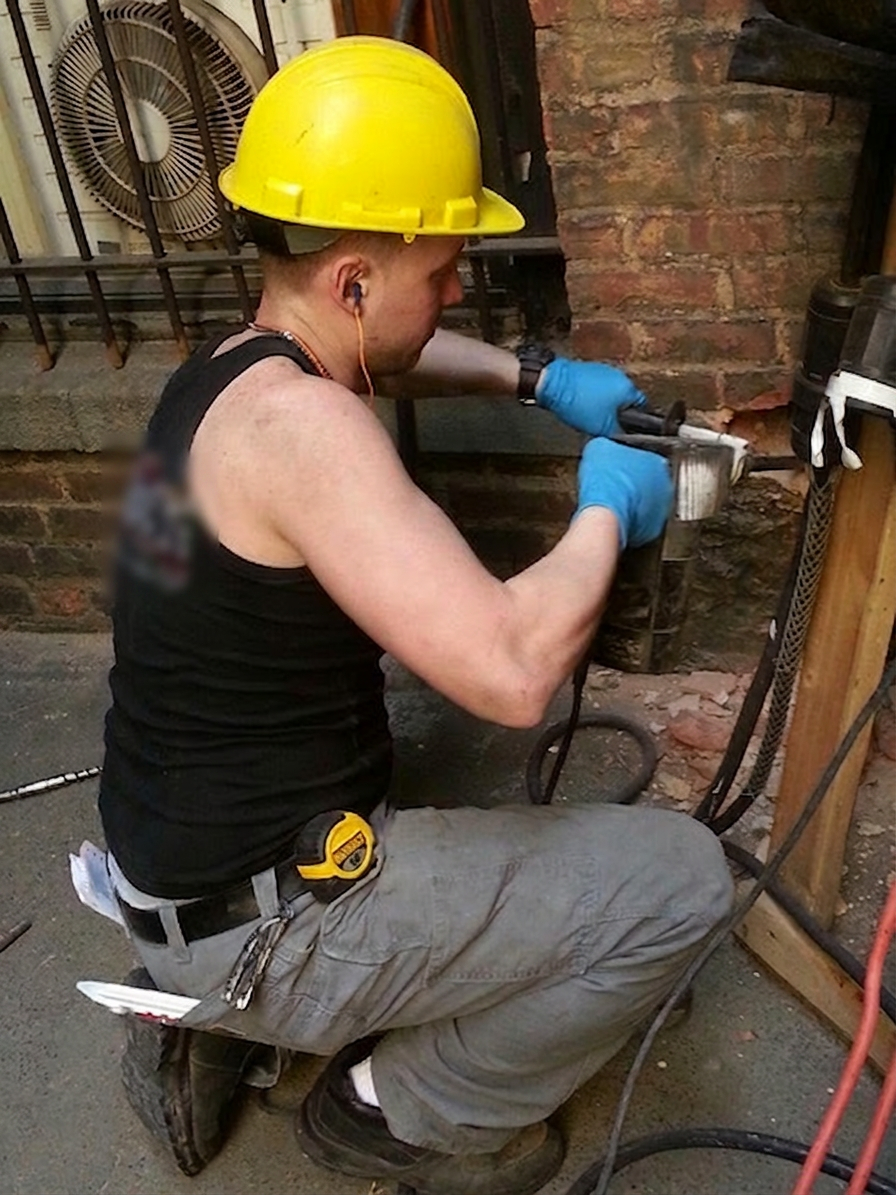
Repair execution
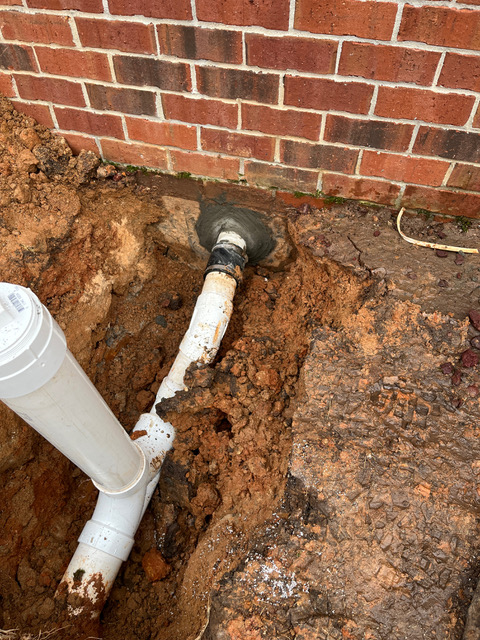
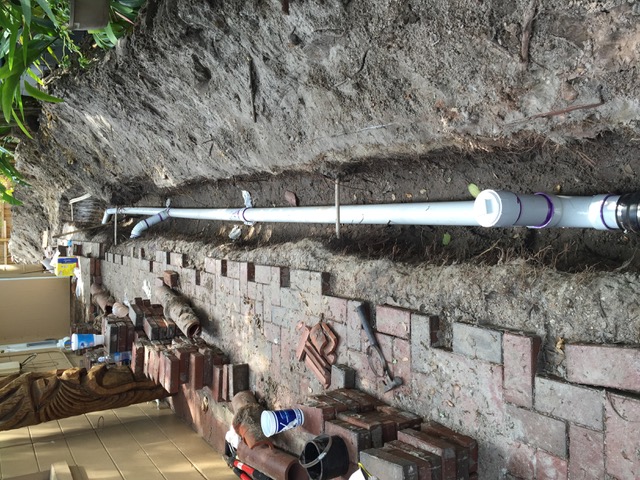
Spot repairs use targeted excavation at the defect. Trenchless lining cures a new pipe inside the old one. Pipe bursting pulls a new HDPE pipe through the existing path. Replacement is a full open-trench dig when nothing else will hold.
- 5
Test, inspect & restore
We pressure-test, run a final camera pass, schedule the city inspection, and restore the work area as cleanly as the scope allows.
What sewer line repair costs in North Atlanta
Sewer repair pricing varies more than almost any other plumbing service — a $900 spot repair and a $14,000 trenchless replacement can be on the same street. What drives the number:
- Type of repair: spot dig vs. cured-in-place lining vs. pipe bursting vs. full open-trench replacement.
- Depth of the line — lines deeper than 6 feet require shoring and significantly more excavation.
- Length of pipe being repaired or replaced.
- What's above the line — driveway, mature landscaping, retaining wall, or city sidewalk.
- Permit and inspection fees, which vary by county and city.
- Whether the city tap or cleanout needs to be replaced as part of the work.
North Atlanta sewer conditions we see every week
North Atlanta is a patchwork of housing stock and soil conditions, and that drives a lot of plumbing decisions. Subdivisions built in the 1990s and early 2000s across Canton, Woodstock and Holly Springs typically run builder-grade PVC and CPVC that's now reaching end-of-life on fittings and shutoffs. Older homes in Marietta, Roswell and Kennesaw still have cast-iron drains and copper supply that scale up and pinhole. Newer construction in Acworth, Ball Ground and Cumming sits on red clay that shifts seasonally and stresses underground lines.
We work in this market every day, so we know which neighborhoods have shared sewer easements, which water utilities require a permit pull, and which inspectors want to see specific fittings. That local knowledge shortens the job and keeps it code-correct the first time.
Need service in a specific area? See our pages for Canton, Woodstock, Holly Springs, Acworth, Kennesaw, Marietta, Roswell and more on our service areas page.
Frequently asked questions
Can you repair my sewer line without digging up the yard?
Often, yes. If the existing pipe has structural integrity, cured-in-place lining (CIPP) inserts a new pipe inside the old one with minimal digging. If the existing pipe is collapsed, pipe bursting pulls a new HDPE line through the same path. We confirm what's possible from the camera footage.
How long does a sewer line last?
PVC: 50–80 years. Cast iron: 50–75 years, sometimes less in acidic soil. Clay tile and Orangeburg (older homes): often failing now. Many North Atlanta homes built before 1980 are at the end of their original sewer line's life.
Do I need a permit?
Yes for most sewer repairs and all replacements. We handle the permit and the inspection — that's part of doing the job right.
Will my homeowners insurance cover this?
Standard policies usually don't cover the line itself, but may cover water damage caused by a backup. Some insurers offer a 'service line' rider. Check your policy or ask us and we'll help you read it.
Need it fixed today?
Same-day service across North Atlanta. Call now or request a quote online.